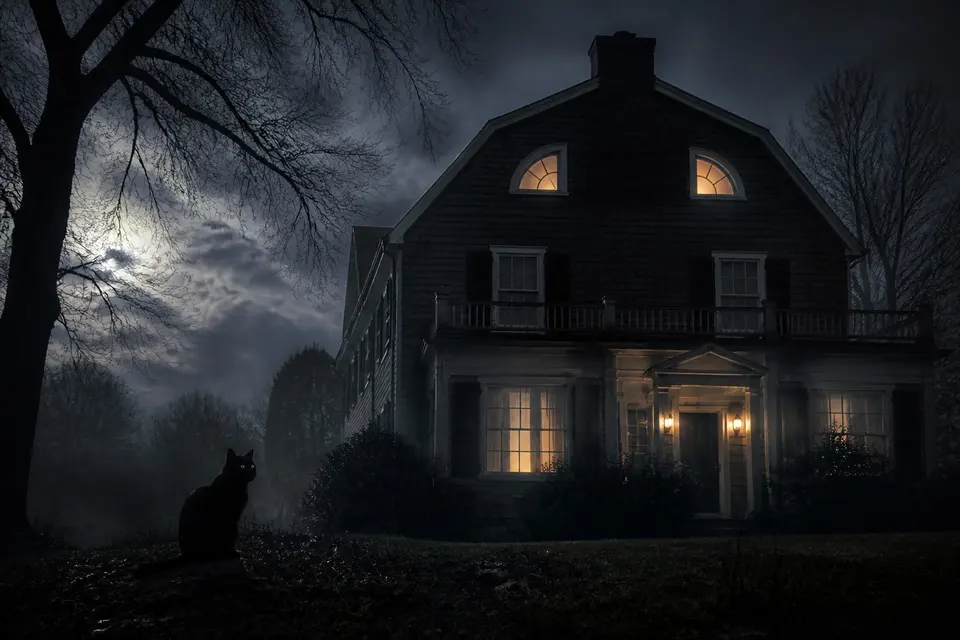
The Amityville Horror is the story of a house on Long Island, New York, said to have been haunted by a violent presence. It became a best-selling book in 1977 and a famous horror film in 1979, and it is often called a true story. The facts underneath are tragic and real, but the haunting itself has been challenged by many investigators and by some of the people involved.
What happened at the house?
On the night of 13 November 1974, Ronald DeFeo Jr., age 23, shot and killed six members of his family while they slept at their home at 112 Ocean Avenue in Amityville: his parents, Ronald and Louise, and four of his siblings. He was arrested and, in 1975, convicted of six counts of second-degree murder and sentenced to prison. DeFeo claimed at different times that he heard voices or acted from fear. His lawyer, William Weber, argued that he was insane, but the jury rejected that defense.
Who were the Lutzes?
In December 1975 George and Kathy Lutz bought the house at a low price, with their three children, and moved in. They left after 28 days. They said that during that time they experienced a long list of terrifying events: cold spots, swarms of flies in winter, green slime on the walls, a demonic pig figure with glowing eyes, unexplained footsteps and George waking at 3:15 in the morning, the time that DeFeo was said to have committed the murders.
How did the story become famous?
A writer, Jay Anson, wrote The Amityville Horror in 1977, based on interviews and tape recordings with the Lutzes, and presented it as a true account. The book sold millions of copies. A film followed in 1979, with several sequels and remakes. The paranormal investigators Ed and Lorraine Warren visited the house and promoted the case, and a number of other investigators were involved.
Why do many people doubt it?
Several points raise questions.
- The lawyer's statement. William Weber, who had represented DeFeo, said in interviews that he and the Lutzes had "created this horror story over many bottles of wine," suggesting the account was invented to make money. The Lutzes denied this and insisted their experience was real.
- No physical evidence. Investigators who examined the house found no sign of the claimed damage to doors or locks, and local officials and later residents did not report the events described.
- Later owners. People who bought and lived in the house afterward said they had no paranormal experiences and complained of the attention from curiosity seekers.
- Changes in the story. Details in the book differ from the Lutzes' early statements and from local records, such as references to weather or to the presence of a priest.
- Financial motive. The Lutzes had financial trouble when they bought the house, and the story brought them money from a book and film deal, which some critics see as a reason to be careful.
What about the Warrens?
Ed and Lorraine Warren, who claimed to have found evidence of a haunting, are not regarded as neutral by skeptics, who note that they promoted cases with commercial interests. Scientists and researchers such as Stephen Kaplan, who studied the case, said he found it unconvincing.
What can we say with confidence?
We can say with confidence that the DeFeo murders happened and are well documented. The claim that a supernatural force drove DeFeo, or that it later tormented the Lutzes, rests on the testimony of a few people, with weak support and significant doubts. The best way to describe the story is as a legend built on a real crime.
Why does it keep its hold?
Houses are places of safety, so the idea of a home that turns dangerous is powerful. Also, the story's link to a real family tragedy gives it emotional weight, and the film industry has kept it before the public for decades. The same mix of real history and later embellishment appears in the tales of the Queen Mary and the Bell Witch.
What happened to the house afterward?
The house on Ocean Avenue is a private home, and later owners have lived in it without reporting hauntings. Reports say its address was changed to discourage visitors, and its distinctive quarter-moon attic windows, which gave the film's house its "eyes," were replaced. The family tragedy at the center of the story left real survivors, relatives who have said they dislike the way the murders became entertainment. This is a reminder that behind a legend there are real people, and that retelling a crime as a ghost story has a human cost.