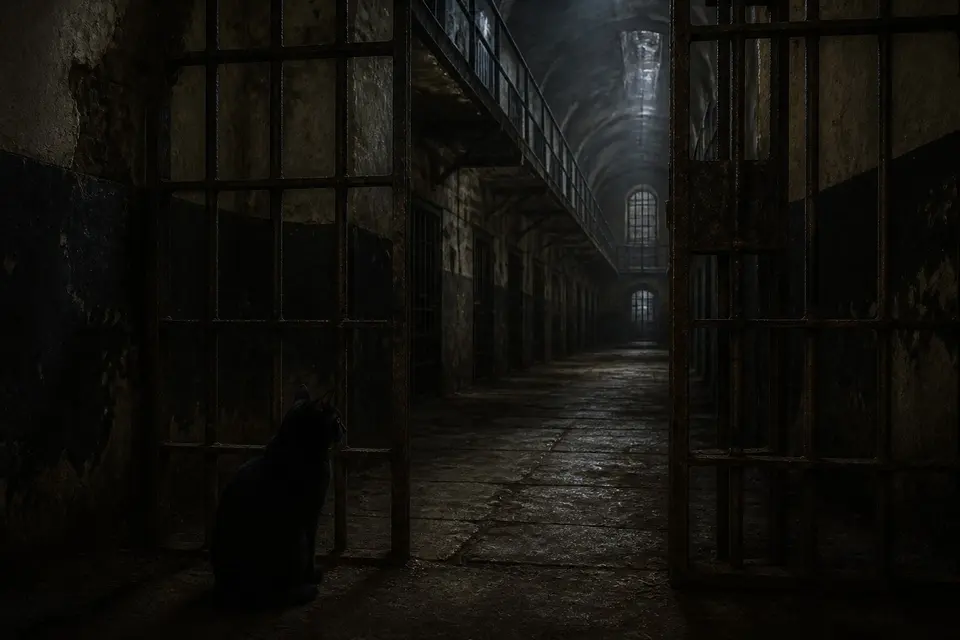
Eastern State Penitentiary in Philadelphia looks like a medieval fortress, with high stone walls, crumbling cell blocks and rusted gates. Many visitors report whispers, shadows and a feeling of being watched, and the site is often named among the most haunted places in the United States. The stories are tied to a remarkable history that is worth knowing first.
What was Eastern State?
Eastern State Penitentiary opened in 1829 and was one of the most famous and expensive prisons in the world. It was designed as a place of reform. Its builders believed that criminals could be changed by solitude, silence and reflection, an approach known as the Pennsylvania system, and that they would become "penitent," which is the root of the word "penitentiary." Each prisoner lived alone in a cell with a small skylight, and was kept in isolation and often hooded when moved.
What was life like inside?
The system sounded humane to its supporters, but the reality was harsh. Years of near-total isolation caused many inmates to suffer mental distress. The English writer Charles Dickens visited in 1842 and described the system as "slow and daily tampering with the mysteries of the brain," arguing that it was cruel. By the late nineteenth century, the prison dropped strict isolation because of overcrowding, and inmates lived in groups. The prison held thousands of people over 142 years, including the gangster Al Capone, who spent about eight months there in 1929 and 1930 after a weapons arrest, in a cell furnished with comforts.
When did it close?
Eastern State closed in 1971, and the buildings were left empty. Trees grew inside the cell blocks and ceilings fell in. In the 1980s and 1990s the site was stabilized and opened to the public, and it is now a museum and a historic site with tours.
What are the ghost stories?
Stories speak of footsteps in empty corridors, laughter in Cellblock 12, shadowy figures in the watchtowers and faces at the cell doors. A popular tale says Capone was haunted by the ghost of James Clark, a man killed in the 1929 St. Valentine's Day Massacre, and that his cries could be heard from his cell. Some visitors and staff say they have felt touched or have heard whispers. The site holds an event each autumn with a haunted house attraction, and it has appeared in television programs about the paranormal.
What does the evidence show?
The history of the prison is well documented, but evidence for ghosts is not. The story of Capone and Clark is hard to support, since there are no reliable records of such an episode. Many of the tales are told by guides and entertainers, and some were popularized after the prison became a Halloween attraction. Cameras and audio recordings made in the cell blocks have produced sounds and images that are open to explanation. The museum itself notes that its history is more compelling than the ghost stories.
What could explain what people experience?
An abandoned prison makes a powerful setting. Large stone buildings with long corridors produce echoes, and wind passing through broken windows can make moaning sounds. Cold and damp make people uneasy, and the knowledge that people suffered there can lead visitors to feel dread. Researchers have shown that low-frequency sound, or infrasound, can cause feelings of unease, although its effect on ghost reports is debated. Suggestion and expectation add to the effect: when you are told a cell is haunted, you are more likely to notice odd sensations.
Why does the place feel haunted to so many?
Some of the answer lies in what the prison represented: the idea that isolation could cure the mind, which turned out to harm many of those it held. A visit confronts people with real stories of confinement. The sense of a lingering presence may be a way of feeling the weight of that history. Similar stories of a place absorbing the pain of the past appear in the Queen Mary's legends and in other houses of tragedy, such as the Winchester Mystery House.
What can you see on a visit today?
The site is kept in what the museum calls a state of "preserved ruin": walls are stabilized, but peeling paint and fallen plaster are left as they are. Visitors walk through long vaulted cell blocks, see the restored cell where Capone stayed, the hospital wing, the synagogue and the baseball field, and hear audio tours narrated by former guards and staff. In autumn the site runs a seasonal Halloween event. The contrast between serious history and entertainment is part of why opinions about the place are so varied, and why historians recommend reading the museum's own research alongside any ghost story.