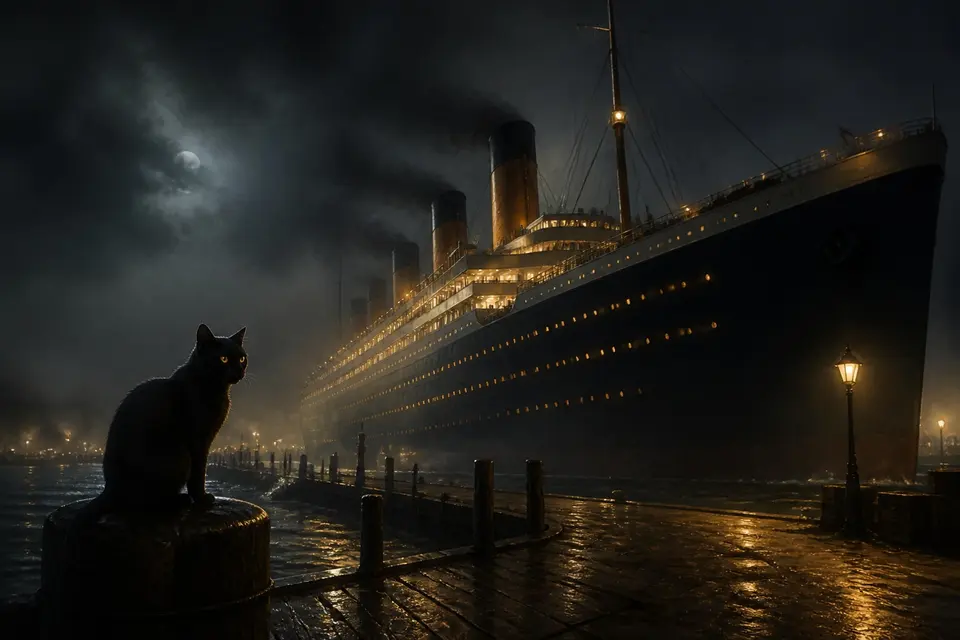
The RMS Queen Mary, a great ocean liner now docked in Long Beach, California, is famous as a hotel, a museum and a haunted place. Guests and tour guides tell of voices in empty corridors, wet footprints by a drained pool and a door that people say no one should open. The ship's long history gives the stories plenty to feed on, but it also helps to separate the documented history from the lore.
What is the Queen Mary?
The ship was built in Scotland for the Cunard White Star Line and launched in 1934. She made her first voyage across the Atlantic in 1936 and was a symbol of luxury, carrying film stars and politicians. During World War II she was painted gray and used as a troopship, carrying many thousands of soldiers at a time, and earned the nickname "the Grey Ghost" because she was fast and hard for submarines to find. After the war she returned to passenger service until she was retired in 1967 and bought by the city of Long Beach, where she became a tourist attraction.
What are the ghost stories?
Different parts of the ship have their own tales.
- The swimming pools. Visitors report hearing splashing and children's voices near the first-class pool and a second pool that is closed to the public. Some say they have seen the figure of a woman in an old-fashioned bathing suit.
- Engine room door 13. Lore tells of a young crewman killed by a heavy watertight door during a drill in 1966, and of shadowy figures and bangs near that spot.
- First-class staterooms. Some cabins, including B340, are said to have cold spots, moving objects or a sense of being watched.
- The 1942 collision. In October 1942 the Queen Mary, carrying troops, accidentally struck and sliced through the escort cruiser HMS Curacoa off the coast of Ireland, killing hundreds of sailors. Ship orders at the time did not allow the liner to stop in dangerous waters. Some ghost stories refer to this event, and tour guides say that sounds of the disaster can be heard in a particular area.
What does the record show?
The ship's history is real, and the collision with the Curacoa is well documented as a wartime tragedy. But the claims of ghosts are another matter. Reports of how many people died on board over the years vary widely, and the ship's own promotional material has sometimes repeated large numbers that historians say are not backed by records. Several stories have changed over time: details such as names and dates are often added to older accounts, and some tales appear in writing only after the ship became a tourist site. No controlled test has produced evidence of a spirit.
What can explain the experiences?
Skeptical investigators point to ordinary causes. A large steel ship makes noises: pipes, engines, wind and temperature changes cause creaks and bangs. Narrow corridors and echoing metal spaces make voices travel strangely, and sounds from other parts of a big building can seem to come from nowhere. Old buildings and ships also have drafts, which cause cold spots. Expectation matters too: people on a ghost tour, in dim light, are primed to notice and interpret small sensations. Psychologists call this suggestion, and it can shape what people remember afterward.
Why does the legend appeal?
Ships are natural settings for ghost stories because they carry people through danger and may be linked to death in war or at sea. The Queen Mary's wartime service and the Curacoa tragedy add emotional weight. The ship also makes money from its reputation, with ghost tours and an annual Halloween event, which keeps the stories visible. Another place whose legend grew along with its tourism is the Winchester Mystery House, and a prison with a similar mix of real history and ghost lore is Eastern State Penitentiary.
What is a sensible way to think about it?
You can enjoy the ship's atmosphere and its history without treating every story as fact. It helps to ask: Who first told this story, and when? Is there a record from the time? Could there be a simple explanation? If you want a case with a long paper trail, compare it with the Mothman sightings in Point Pleasant.